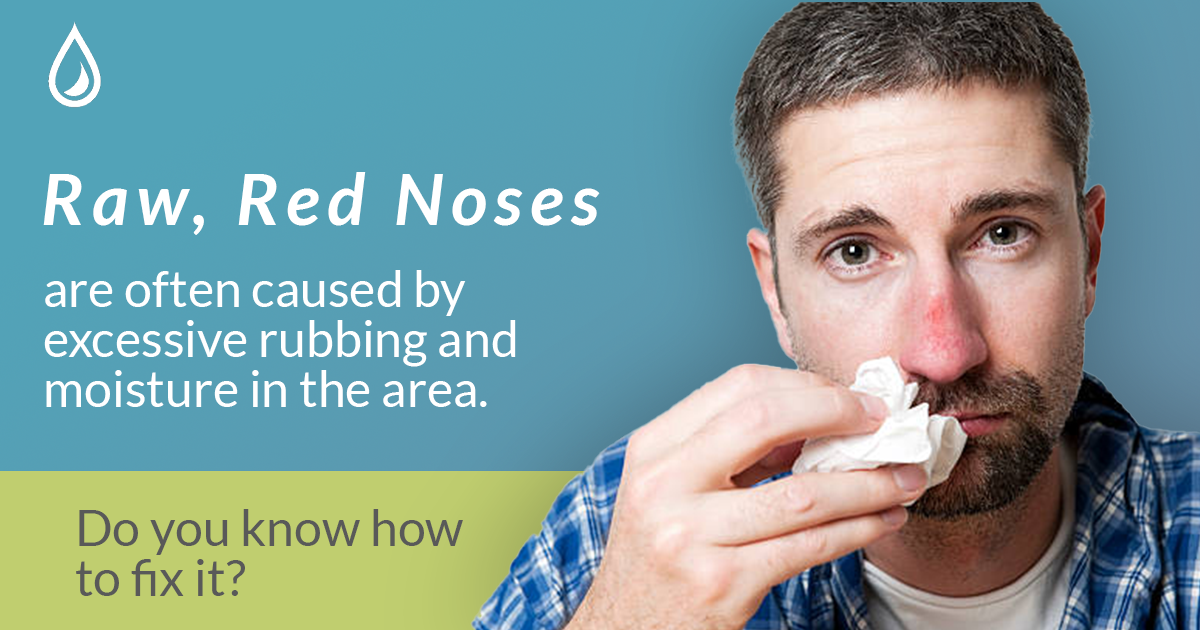
 We’ve all experienced the painful, raw, red nose that accompanies the stuffiness cold weather usually brings on. While it’s common, it’s also annoying and painful—not to mention the fact that although it might be in season for Rudolph, not all of us can pull it off quite as well.
Almost everyone has experienced a cold and therefore, the seemingly endless running of your nose. While that’s inevitable, developing a raw nose isn’t. So how do some people get them?
Well, chronic rubbing certainly can result in chapping of the nose. When you’re consistently (sometimes a hundred time a day!) blowing your nose and rubbing off the excess, it can over exfoliate the area, resulting in raw skin cells.
Also, wetness from a runny nose can result in a chapped, red, scaly appearance.
So, first things first: We’ve got to figure out a way to fix the root of the problem and decrease the amount of chapping by decreasing the rubbing or decreasing the runniness of your nose.
The key is to use something mild, but effective.
Something like a mild hydrocortisone can help prevent this, which you can get over the counter. A 1% hydrocortisone used for a week or two can really help with some of the inflammation secondary to chronic running and wetness of the nose.
If the hydrocortisone 1% that you use for a week or two does not work, then go see your dermatologist for something a bit stronger.
Another method is to be aware of what type of tissues you’re using to blow your nose. Toilet paper and paper towel are often convenient to use, but can make the issue much worse due to the rougher texture.
Opting for tissues that are soft and contain moisturizing ingredients can help prevent extreme cases of a red and raw nose.
If you’re struggling with a painful red nose, using a moisturizer with emollients and ceramides will be your best bet.
Previously, the use of petroleum-based moisturizers were a go-to for such a skin irritation but since we’ve learned these are often goopy and pore-clogging, alternatives with ceramides are a better option to help restore the skin.